
Fort Worth, TX — May 26, 2026 — As electrification expands across transportation, aerospace, defense, medical technology, robotics, and energy storage, battery testing is evolving from a measurement function into a decision layer for product safety, production quality, and system reliability.
In these environments, the question is no longer simply whether a battery cell or module can be tested. The more important question is whether the data generated through testing can be interpreted quickly enough to identify risk before it moves downstream.

That direction was strongly aligned with the themes of NI Connect 2026, where discussions across the test and automation ecosystem focused on the growing role of AI, software-centric systems, and intelligent workflows in helping engineering and production teams manage increasingly complex systems at scale.
Held May 12–14 in Fort Worth, Texas, NI Connect brought together teams working across advanced test, automation, data acquisition, and engineering systems. For EECOMOBILITY, participating as an NI Partner provided an opportunity to connect the broader direction of the test industry with one of the most urgent challenges in electrification: identifying battery defects early enough to improve production decisions and reduce downstream risk.

A key highlight of the event was a technical session delivered by EECOMOBILITY Founder & CEO Dr. Saeid Habibi, titled “Catch Battery Defects with AI and ML during Cell and Module Testing.” The session explored how artificial intelligence and machine learning can be applied to high-volume battery cell production environments to detect defects and anomalies that may increase the risk of faulty cells, thermal events, recalls, or later-stage system failures.
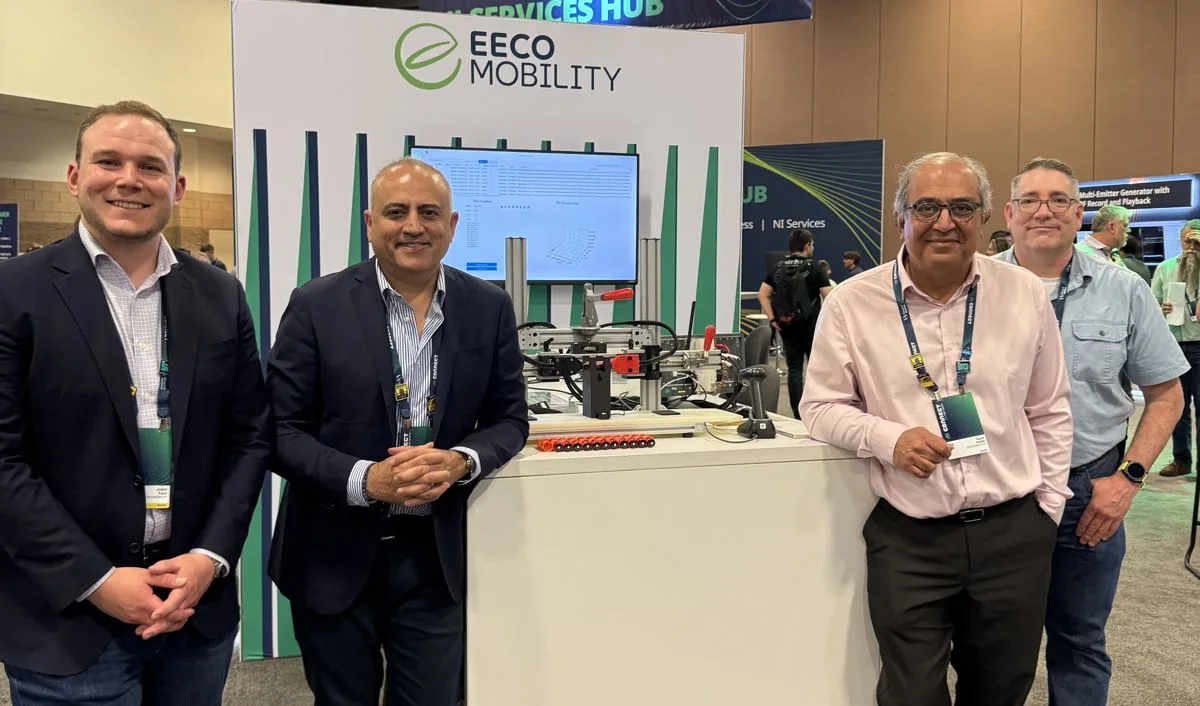
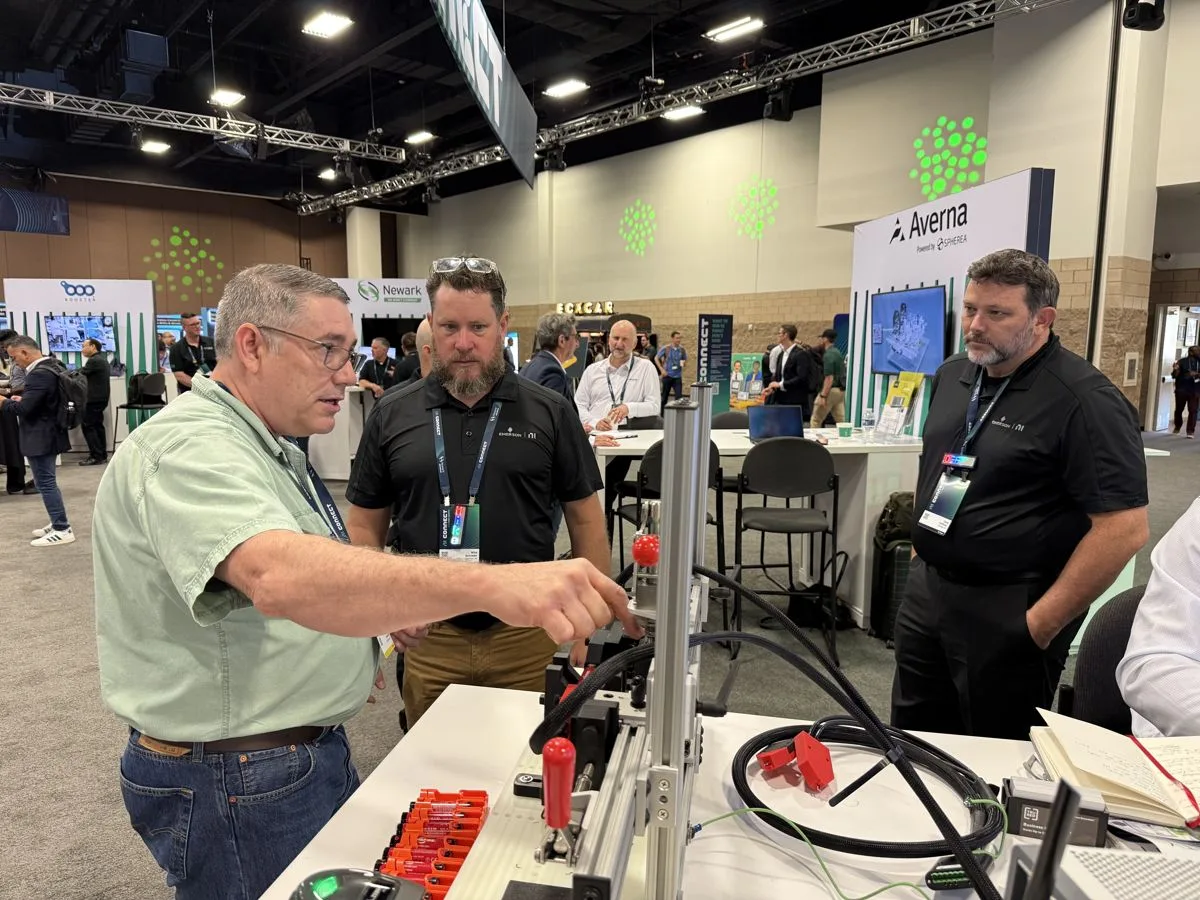
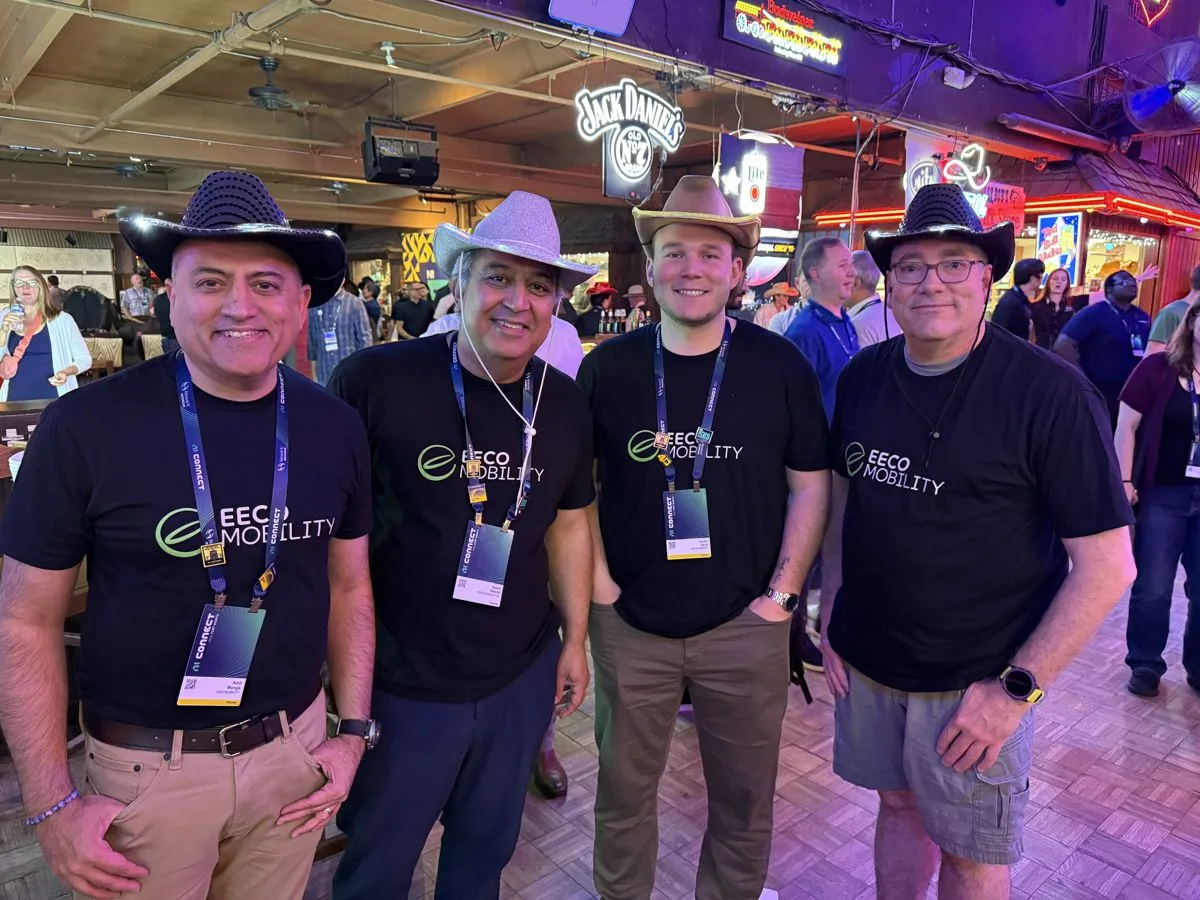
NI Connect was also attended by Dr. Amit Monga (President), Mike Paterson (Engineering), and Justin Faux (Sales & Marketing), who participated in over 50 meetings that covered technical demonstrations of EECOPower platform and discussions with NI sales and industry groups, OEMs, battery manufacturers, and ecosystem partners across transportation, aerospace, defense, medical technology, and energy storage sectors.
Modern battery production lines already generate enormous amounts of data. The challenge is no longer collecting measurements — it is determining which signals actually matter before risk propagates further downstream. In high-volume environments, even low-probability defects become meaningful once scaled across millions of cells.
Conventional end-of-line tests often compress battery behavior into one or two measurements, making subtle manufacturing variation difficult to identify at production speed. Battery production creates large volumes of test data, but measurement alone is not enough. The more difficult challenge is identifying weak signals within complex battery response data — signals that may indicate early-stage defects, process variation, contamination, abnormal cell behavior, or other conditions that become more consequential once cells are integrated into modules, packs, or finished systems.
This is especially important as batteries move into applications where failure tolerance is shrinking. Across end markets, the first-principles problem is similar: the battery is no longer a passive component. It is a core system dependency. When battery quality is uncertain, product reliability, customer safety, operational readiness, and commercial performance can all be affected.
EECOMOBILITY’s approach is designed around this reality. By combining advanced battery characterization with AI-enabled analytics, EECOPOWER helps translate cell and module test data into faster quality decisions. The goal is not only to test batteries more quickly, but to help manufacturers and integrators better understand which cells behave normally, which cells require attention, and where risk may be emerging before it becomes a downstream issue.
Conversations throughout NI Connect reinforced a broader industry shift: test systems are increasingly expected to support production and engineering decisions across the full product lifecycle — not simply generate measurements.
For EECOMOBILITY, this direction aligns closely with the company’s expansion across multiple industry verticals where battery performance is becoming central to system design, operational confidence, and commercial success. The same underlying capability — interpreting battery behavior quickly and accurately — can support a wide range of use cases, from incoming quality control and production screening to supplier validation and module-level risk assessment.
NI Connect 2026 reinforced a clear market direction: the future of test is not only faster measurement. It is more intelligent interpretation, stronger automation, and better use of data to support decisions at scale.

As electrification continues moving into higher-value and higher-consequence environments, EECOMOBILITY remains focused on helping manufacturers, OEMs, and technology partners improve confidence in the battery systems powering the next generation of products.