At the Advanced Automotive Battery Conference (AABC) 2025, one message emerged clearly across technical sessions, closed-door discussions, and informal conversations alike: battery programs are entering a new phase, and traditional approaches to testing are no longer sufficient on their own.
As battery production scales, chemistries diversify, and safety expectations continue to rise, the limiting factor is no longer measurement capability — it is decision velocity. The ability to extract meaningful insight early, reliably, and at scale is rapidly becoming a defining competitive advantage.
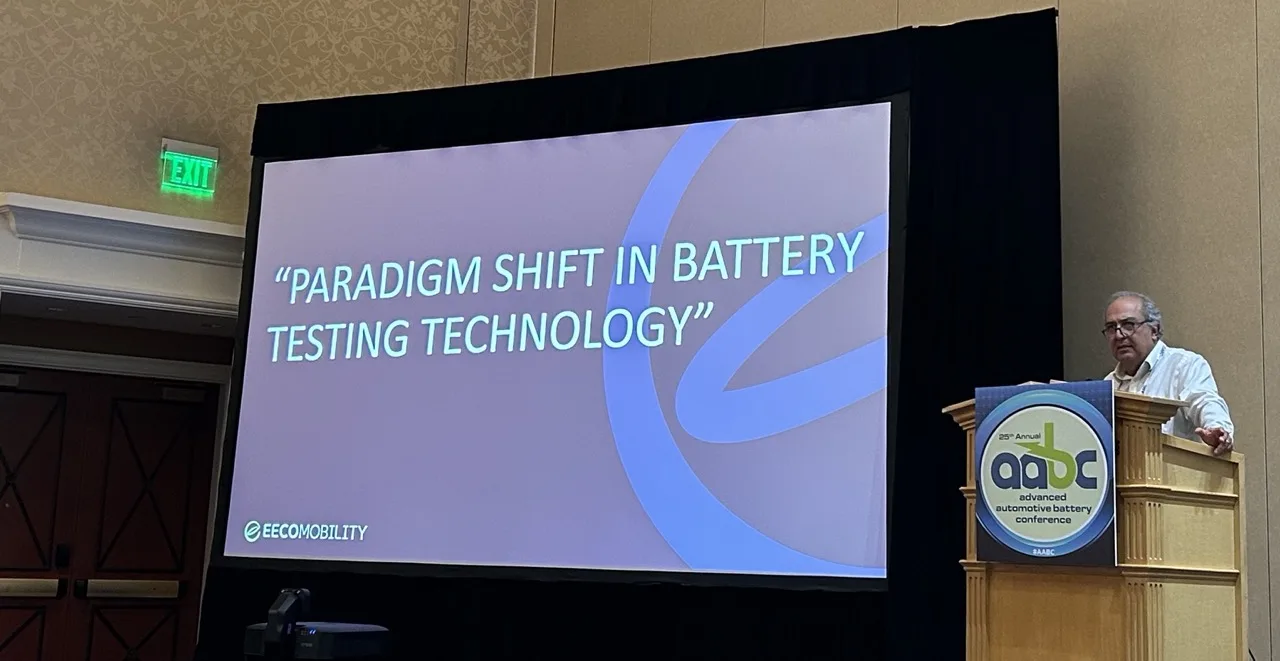
This shift was succinctly captured in the opening slide of EECOMOBILITY Founder and CEO, Dr. Saeid Habibi’s session, “Advanced Battery Management System for EVs,” which framed the moment as a paradigm shift in battery testing technology. Notably, that phrase did not originate on a conference stage. It first emerged in 2023 during an early proof-of-concept deployment, voiced by a test engineer observing firsthand how intelligence-driven testing altered what was possible within standard production constraints.
AABC did not introduce this shift — it confirmed it.
The Limits of End-of-Line Testing
One of the most persistent challenges facing automotive and other mission-critical products battery programs today is the presence of defective cells that successfully pass end-of-line (EOL) testing, only to surface later in the field or during downstream validation.
EOL testing has long been optimized for throughput. Measurements such as ACIR and OCV provide fast, valuable snapshots of electrical compliance, but they are inherently limited in their ability to detect rare or latent failure modes. As production volumes grow, defects that once appeared statistically insignificant become operationally inevitable — and increasingly costly.
In modern battery programs, the most consequential defects are no longer the obvious ones. They are the ones that pass.
From Detection to Manufacturing Intelligence
Critically, the value of advanced battery testing does not begin — or end — at EOL.
While downstream detection remains essential, many manufacturers are now looking upstream toward formation, aging, and earlier production stages to understand why variability emerges in the first place. At these stages, insight is not only about identifying defective cells, but about assessing line stability, detecting process drift, and improving overall yield.
By applying intelligence-dense testing earlier in the production lifecycle, manufacturers gain the ability to intervene before defects propagate, reducing scrap, improving consistency, and strengthening long-term performance outcomes.
In this context, battery testing evolves from a quality checkpoint into a continuous feedback mechanism — one that informs both product integrity and manufacturing economics.
System-Level Thinking: Insights from AABC
These themes were central to Dr. Habibi’s AABC session, “Advanced Battery Management System for EVs,” which emphasized the growing convergence between testing, data, and system-level intelligence. As battery programs mature, isolated measurements give way to integrated learning loops, where information generated across the lifecycle informs design, validation, and operational decision-making.
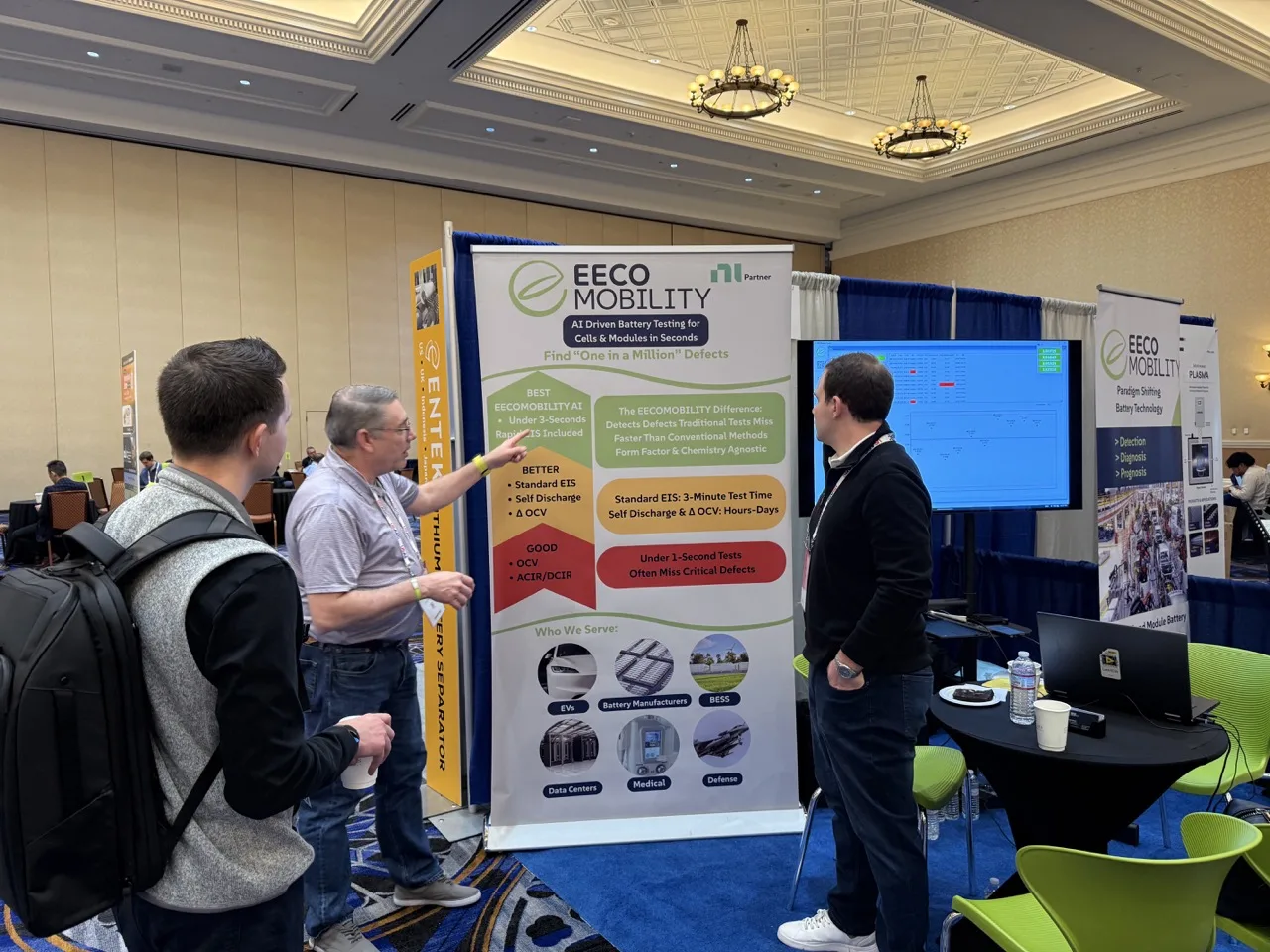
Platforms such as EECOPOWER operationalize this shift by embedding AI-driven analysis directly into standard test stations, operating within sub-three-second time windows alongside traditional ACIR and OCV measurements. The result is not a replacement of established methods, but an augmentation — increasing the intelligence density of each test cycle without requiring manufacturers to redesign existing workflows.
The future of battery testing is not faster stations. It is smarter stations operating at the same speed.
Industry and Investor Validation
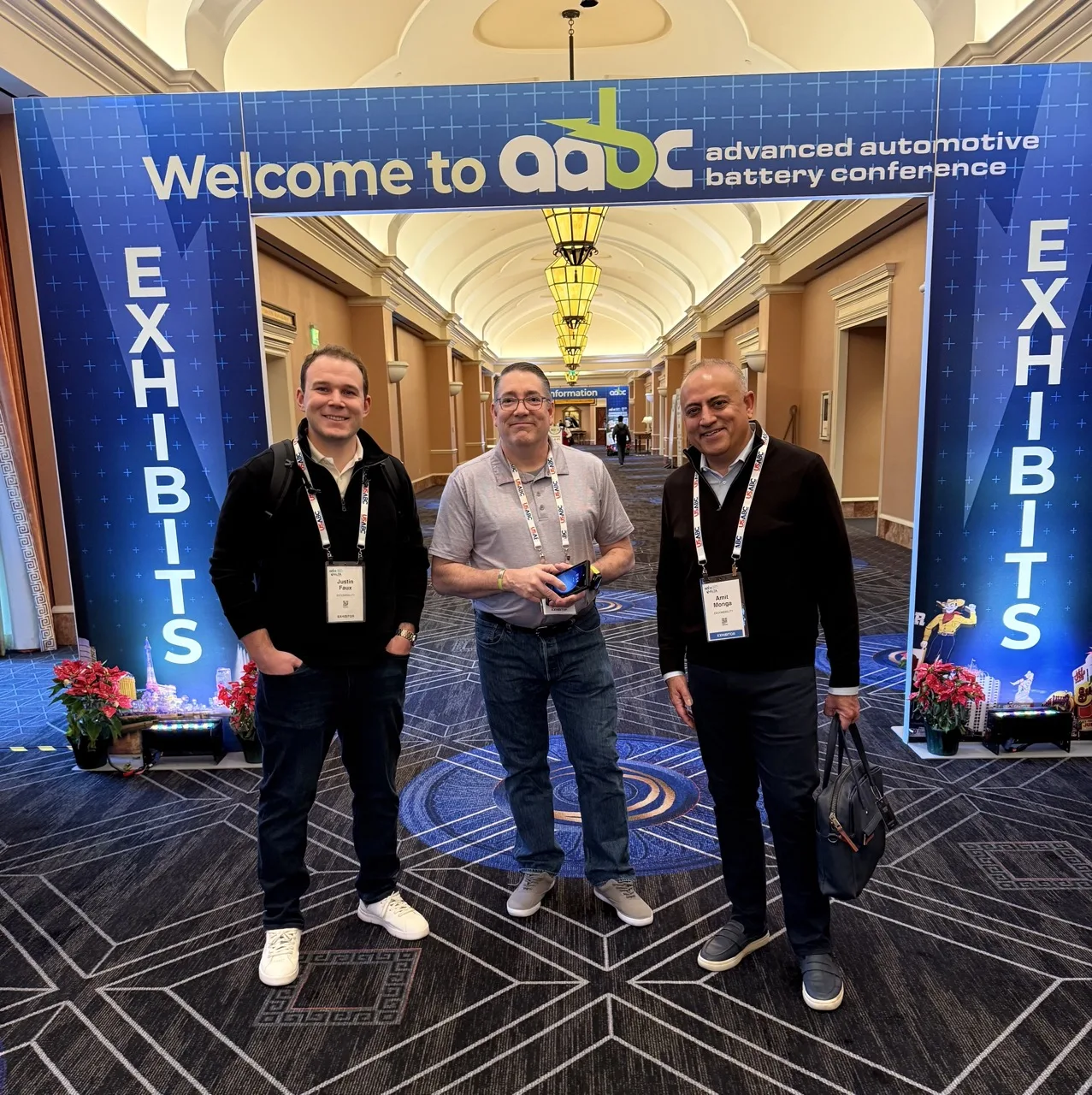
AABC 2025 brought together leading global OEMs, battery manufacturers, technology partners, and institutional investors. Across these groups, discussions consistently converged on the need for software-centric, intelligence-driven testing approaches that address both safety risk and manufacturing efficiency.
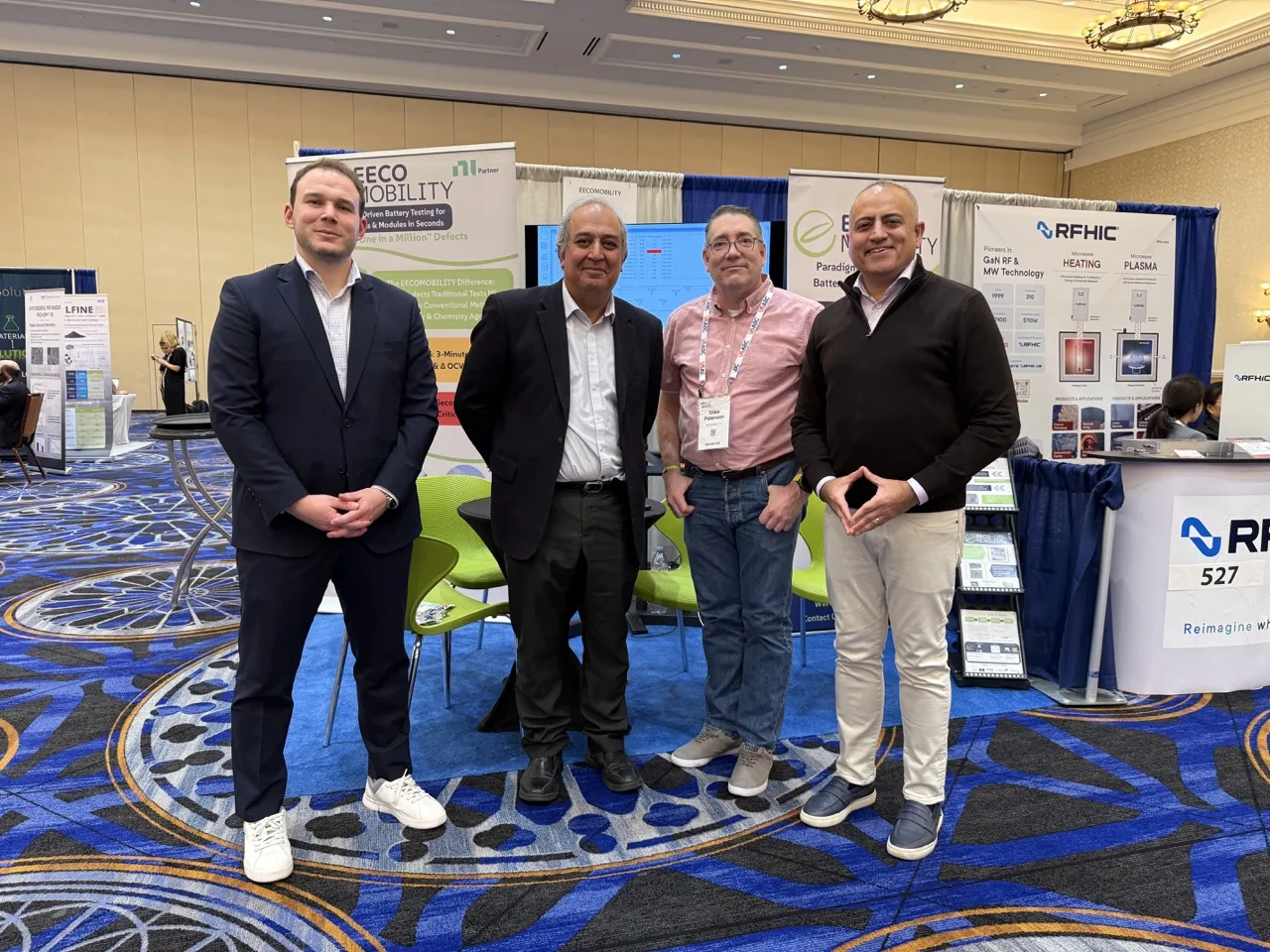
EECOMOBILITY engaged with stakeholders across the battery ecosystem throughout the conference, with strong interest expressed in its technology roadmap and its approach to addressing escaped defects, yield optimization, and lifecycle insight.
Looking Ahead
The paradigm shift underway in battery testing reflects a fundamental rethinking of how insight is generated, when it is applied, and how quickly it informs action.
As battery programs continue to scale in complexity and volume, those who adopt intelligence-driven testing earlier in the lifecycle will be better positioned to manage risk, improve yield, and accelerate innovation. AABC 2025 made clear that this shift is no longer theoretical — it is already reshaping how the industry approaches battery development and production.